
Global Council for Historical Justice.
The Global Council for Historical Justice is an international platform dedicated to strengthening historical memory, promoting human dignity, and advancing transnational justice through cultural, educational, and museographic initiatives. Created under the leadership of La Voix International Media & Culture, the Council brings together specialists, institutions, scholars, human rights defenders, and organizations committed to truth, symbolic reparation, and non‑repetition.
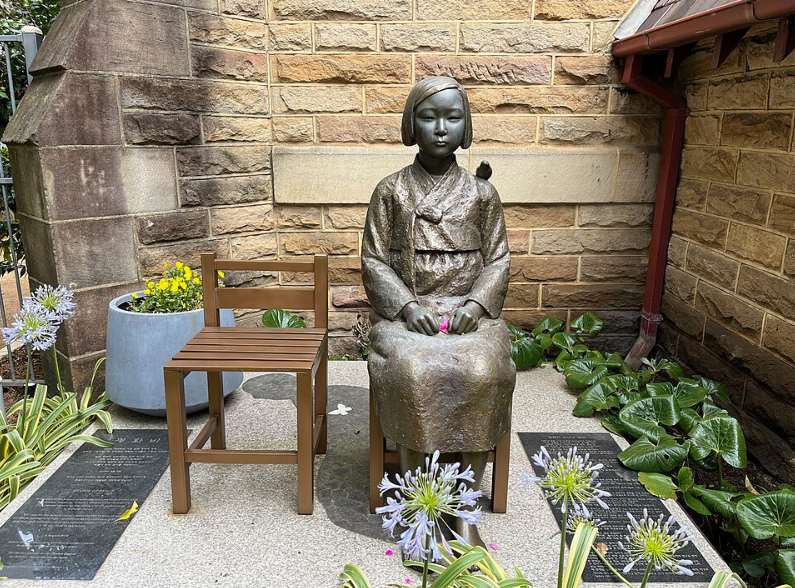
The Council emerges as a global space to articulate efforts around the memory of women affected by violence in contexts of conflict, with particular attention to the legacy of the Comfort Women, one of the most significant cases of systematic sexual violence in the 20th century. Through international projects, exhibitions, publications, professional networks, and educational programs, the Council promotes an ethical and profound understanding of memory as an act of justice.
Our mission is to build bridges across continents, disciplines, and communities, fostering a global culture of historical responsibility. From research to cultural action, the Council works to illuminate silenced histories, strengthen memory education, and support initiatives that defend human dignity.
The Global Council for Historical Justice is conceived as an open, plural, and collaborative space where memory is understood as a living force capable of transforming societies and shaping more just futures.

Strategic Objectives
Global Council for Historical Justice
1. Strengthen Global Memory Education
Develop and promote educational frameworks, resources, and programs that advance historical memory, ethical awareness, and critical understanding of past injustices.
2. Advance Transnational Justice and Human Dignity
Support initiatives that document, analyze, and address historical violence—especially gender‑based violence in conflict—promoting truth, accountability, and symbolic reparation.
3. Build an International Network of Experts and Institutions
Consolidate a global community of scholars, activists, museums, cultural institutions, and human rights organizations committed to memory and justice.
4. Promote Ethical Museography and Responsible Public History
Develop exhibitions, publications, and cultural projects that present historical memory with rigor, sensitivity, and ethical responsibility.
5. Empower Women as Agents of Memory and Justice
Strengthen the leadership and participation of women—survivors, researchers, educators, and activists—in global conversations on memory, dignity, and non‑repetition.
6. Foster Interdisciplinary and Cross‑Cultural Collaboration
Encourage cooperation across regions, disciplines, and sectors to generate innovative approaches to historical justice and peacebuilding.
7. Support Research, Documentation, and Knowledge Production
Promote rigorous research, testimony documentation, and the creation of academic and cultural materials that deepen global understanding of historical injustices.
8. Influence Public Policy and International Dialogue
Engage with international organizations, governments, and civil society to advocate for policies that protect memory and strengthen gender justice.
9. Ensure Ethical Standards and Responsible Governance
Uphold principles of transparency, inclusivity, and ethical responsibility in all Council activities and partnerships.
10. Cultivate a Global Culture of Non‑Repetition
Promote awareness, education, and public engagement to prevent the recurrence of violence, discrimination, and historical denialism.


Mission & Vision
Global Council for Historical Justice
Mission
The mission of the Global Council for Historical Justice is to strengthen historical memory as a foundation for human dignity, promote transnational justice, and support cultural, educational, and museographic initiatives that give visibility to silenced histories. The Council works to build global networks, advance research, support processes of symbolic reparation, and foster an ethical culture of historical responsibility and non‑repetition.
Vision
The Global Council for Historical Justice aims to become an international reference in the defense of memory, justice, and human rights. We envision a world where communities confront their past with honesty, where women are central actors in shaping collective memory, and where historical truth serves as a pillar for more just, conscious, and peaceful societies. Our vision is a future in which memory becomes a living force capable of transforming realities, connecting cultures, and preventing new forms of violence..