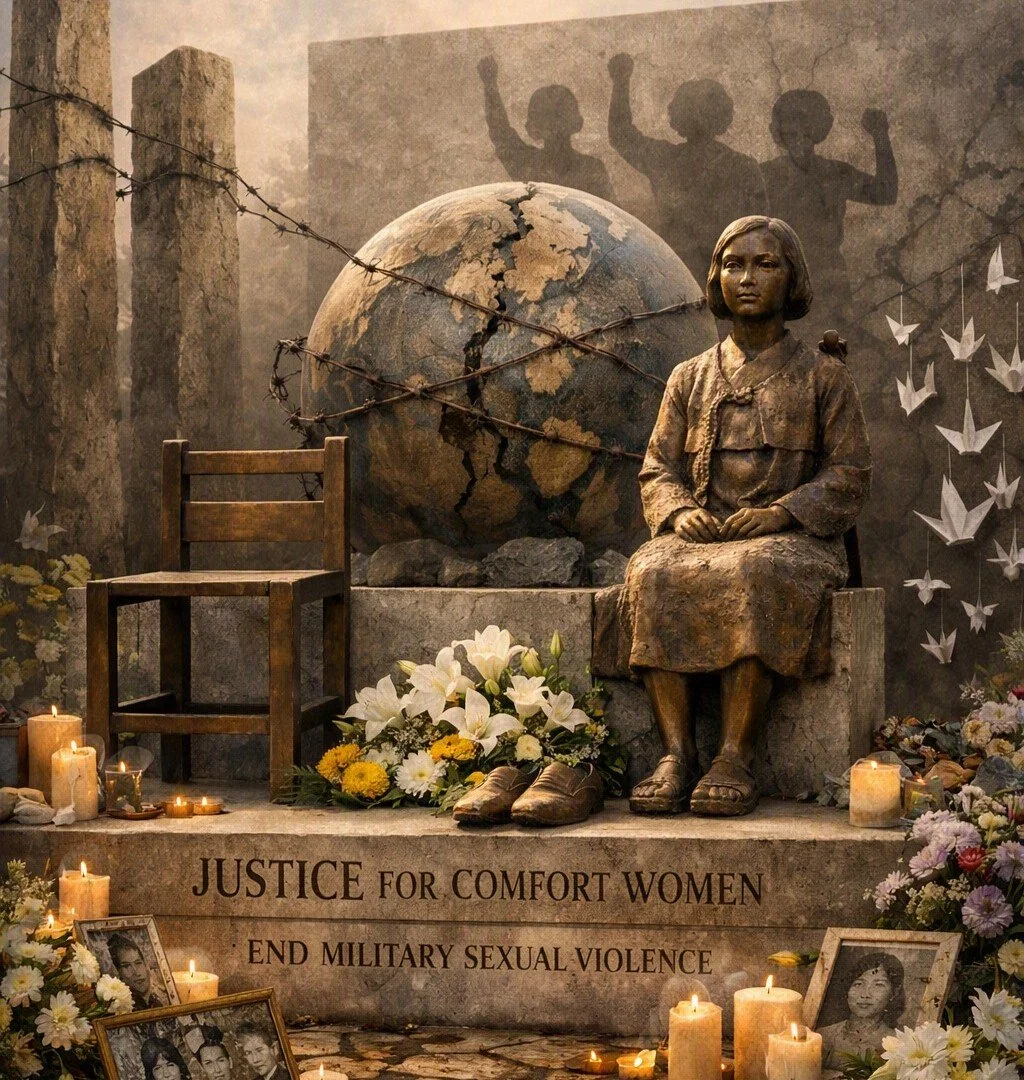
Women’s Memory
Award
Honoring the dignity, resilience and historical memory of survivors.
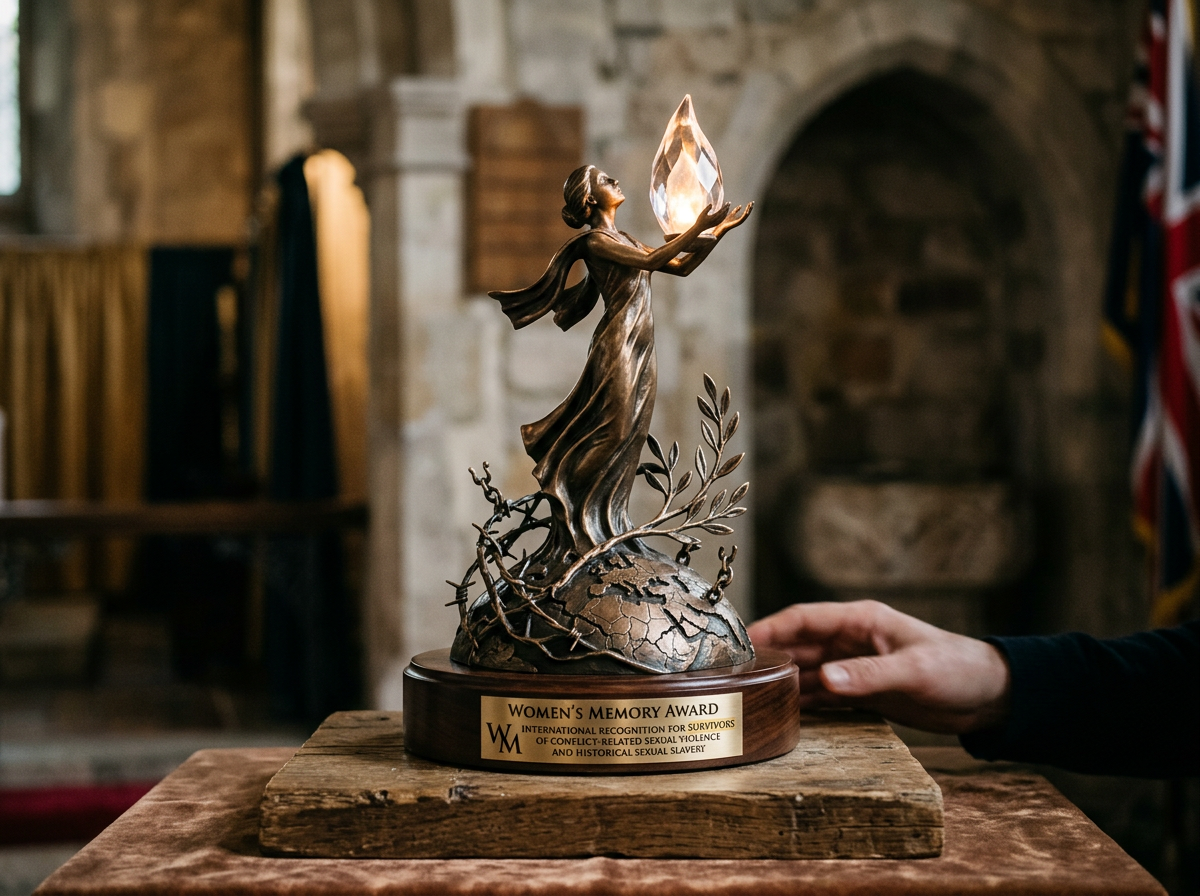
Women’s Memory Award
International Recognition for Survivors of Conflict‑Related Sexual Violence and Historical Sexual Slavery
The Women’s Memory Award stands as a symbolic act of reparation and international recognition for women who survived sexual violence in contexts of war and historical slavery. Promoted by La Voix International Media & Culture, this award honors the dignity, resilience, and legacy of those who transformed pain into memory and memory into justice.
Its purpose is to amplify silenced voices, promote historical truth, and strengthen processes of reparation and international justice. The award embodies a collective commitment to human rights and gender equality, preserving the memory of survivors as a cornerstone of global conscience.
Purpose of the Award
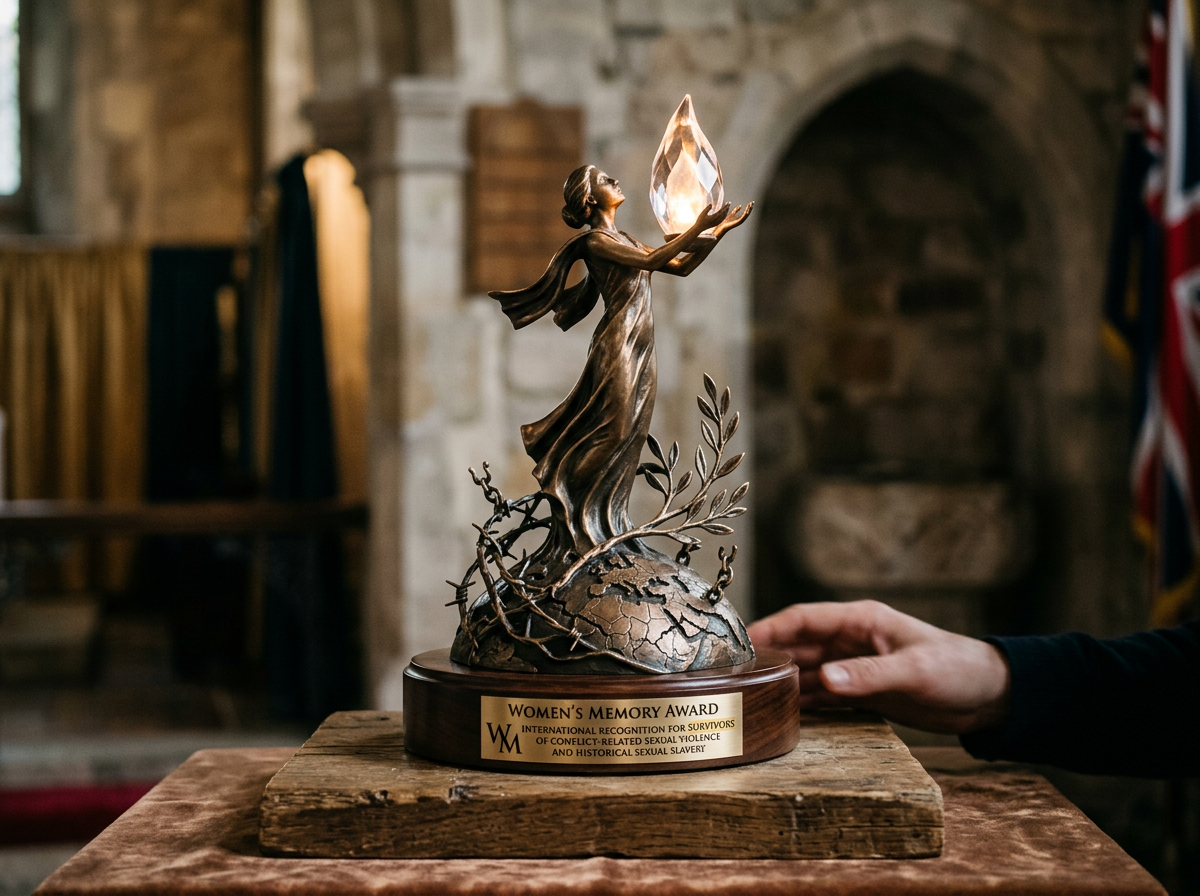
The Women’s Memory Award
seeks to honor, recognize, and preserve the historical memory of women who survived conflict‑related sexual violence and historical sexual slavery. This international recognition stands as a symbolic act of reparation, restoring dignity, visibility, and legitimacy to stories that were silenced, denied, or minimized for decades.
The award affirms the essential role of listening to and documenting survivors’ voices, acknowledging that their testimonies form a cornerstone for historical truth, international justice, and the construction of a collective memory that protects future generations.
The Women’s Memory Award aims to:
Highlight the resilience, courage, and leadership of survivors.
Promote historical truth in the face of war crimes and human rights violations.
Strengthen processes of symbolic reparation and international justice.
Support the creation of archives, exhibitions, and narratives that dignify survivors’ memory.
Connect survivors with international networks of support, research, and advocacy.
Contribute to the global effort to end conflict‑related sexual violence through awareness and education.
This purpose aligns with the mission of La Voix International Media & Culture, committed to safeguarding memory, promoting truth, and amplifying the voices that transform pain into legacy and legacy into justice.
Who Can Be Recognized
〰️
Who Can Be Recognized 〰️
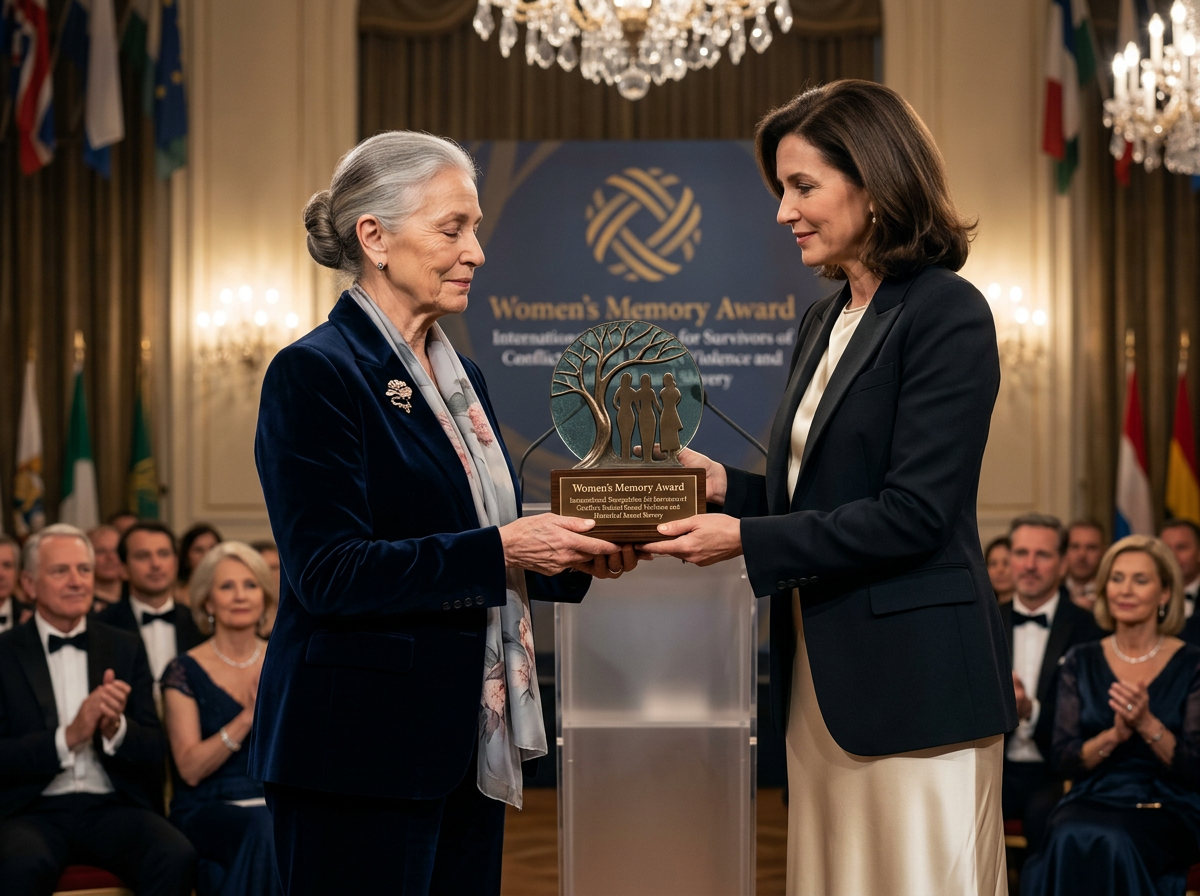
The Women’s Memory Award
honors women survivors and organizations dedicated to historical memory, truth‑seeking, and the dignity of victims of conflict‑related sexual violence and historical sexual slavery. This dual approach strengthens the award’s mission, highlights collective efforts, and expands its international impact.
A. Women Survivors
Eligible for recognition are:
Survivors of sexual violence in armed conflicts, including civil wars, military occupations, ethnic persecution, forced displacement, and mass violence.
Women subjected to historical sexual slavery, in colonial, military, paramilitary, or systematic exploitation contexts.
Women whose testimonies have been documented by international organizations, human rights institutions, historical archives, academic research, or judicial processes.
Survivors who contribute to collective memory, through testimony, activism, community leadership, art, education, or participation in truth‑seeking initiatives.
Women from any country, regardless of nationality, ethnicity, religion, age, or socioeconomic background.
Survivors who wish to protect their identity, allowing the award to be granted publicly or confidentially according to their safety and personal preference.
The award recognizes both those who have spoken publicly and those who choose to remain anonymous for reasons of security, health, or privacy.
B. Organizations, Institutions, and Collectives
The award also recognizes:
Historical memory organizations that preserve testimonies, archives, and documentation related to conflict‑related sexual violence.
Human rights institutions that support survivors, promote truth, and advance international justice.
Museums, cultural centers, and archives that develop exhibitions, research, and projects dedicated to memory and dignity.
Women’s collectives and community networks working in resilience, psychosocial support, education, and leadership.
Universities and research centers producing rigorous knowledge on conflict‑related sexual violence and historical sexual slavery.
Artistic and cultural initiatives that dignify survivors’ memory through visual, literary, or performative narratives.
In all cases, the award seeks to honor dignity, preserve memory, and strengthen symbolic reparation and international justice.
Selection Criteria
The Women’s Memory Award
establishes selection criteria that ensure historical rigor, international legitimacy, and profound respect for survivors and for organizations working in memory, truth, and justice. These criteria integrate both the original standards and the ethical expansion that acknowledges survivors who lived their trauma in silence or who are no longer alive.
A. For Women Survivors
Nominees may include women who meet one or more of the following criteria:
1. Documented Testimony
Their testimony has been verified by international organizations, human rights institutions, historical archives, academic research, or judicial processes.
2. Contribution to Historical Memory
They participate in initiatives related to truth‑seeking, memory preservation, education, art, activism, or community leadership that help make conflict‑related sexual violence or historical sexual slavery visible.
3. Social or Community Impact
They have generated meaningful change within their community through resilience, advocacy, organization, leadership, or participation in symbolic reparation processes.
4. Identity Protection
They may receive the award publicly or confidentially, depending on their safety, health, and personal preference.
5. Integrity of Narrative
Their testimony reflects coherence, dignity, and alignment with principles of truth, justice, and respect.
Expanded Recognition for Survivors in Special Circumstances
The award also honors women whose experiences have been historically silenced or erased:
6. Deceased Survivors
The award may be granted posthumously to women who died without receiving recognition, including historical cases such as the comfort women. Their stories may be documented through:
family testimonies
community memory
historical archives
academic research
institutional reports
This recognition restores dignity to those whom history denied visibility.
7. Survivors Who Never Spoke Due to Trauma, Stigma, or Fear
Silence does not invalidate suffering. Women who were unable to speak—because of trauma, imposed shame, social pressure, or risk—may be recognized if their experience is:
documented by trusted sources, or
preserved by their family or community
The award respects their right to silence and does not require public testimony.
8. Survivors Who Choose Not to Disclose Their Story
Some women decide not to speak, and this choice must be honored. They may receive:
confidential recognition, or
symbolic recognition without public disclosure
Their dignity is acknowledged without exposing their trauma.
9. Women from Any Country or Background
Regardless of nationality, ethnicity, religion, age, or socioeconomic status.
B. For Organizations, Institutions, and Collectives
Nominated entities must meet one or more of the following criteria:
Proven Work in Historical Memory Development of projects, archives, research, exhibitions, or programs that preserve and dignify survivors’ memory.
Support for Survivors Provision of psychosocial, legal, community, educational, or cultural support to women affected by conflict‑related sexual violence or historical sexual slavery.
Knowledge Production Contribution of research, publications, reports, or studies that strengthen historical truth and international justice.
Human Rights Advocacy Active participation in processes of denunciation, awareness‑raising, justice, reparation, or prevention of conflict‑related sexual violence.
Verifiable Impact Demonstrated results in memory preservation, survivor support, education, archival work, or advocacy.
Ethical and Humanitarian Commitment Acting with respect, confidentiality, responsibility, and coherence with principles of dignity, truth, and justice.
Cross‑Cutting Ethical Principle
The Women’s Memory Award affirms that silence, anonymity, or death do not erase truth. Every survivor—whether outspoken, silent, or no longer alive—deserves dignity, recognition, and a place in historical memory.
International Committee
The International Committee of the Women’s Memory Award is composed of institutions, specialists, and cultural leaders committed to preserving historical memory, promoting truth, and defending the dignity of survivors of conflict‑related sexual violence and historical sexual slavery. Its role is to ensure ethical rigor, documentary integrity, and international legitimacy throughout the nomination and selection process.
Composition of the Committee
The Committee brings together:
Association La Voix International Media & Culture – Global Cultura Network Lead institution responsible for the award’s vision, editorial framework, and international coordination.
Museum of Social Memory Custodian of archives, exhibitions, and historical documentation related to survivors and memory initiatives.
Academic and Research Experts Specialists in human rights, gender studies, transitional justice, conflict‑related sexual violence, and historical memory.
Human Rights Organizations and Cultural Institutions Entities that work directly with survivors, document violations, and promote justice and reparation.
International Advisors Professionals from memory centers, universities, cultural foundations, and global advocacy networks.
Mandate and Responsibilities
The International Committee is responsible for:
Evaluating nominations according to ethical, historical, and humanitarian criteria.
Ensuring the protection and dignity of all survivors, including those who are deceased, silent, or anonymous.
Validating documentation from archives, institutions, families, and communities.
Guaranteeing confidentiality when required for safety or emotional well‑being.
Strengthening international alliances that support memory, justice, and survivor recognition.
Promoting global visibility of the award and its recipients through cultural, academic, and media platforms.
Ethical Commitment
The Committee operates under principles of:
dignity
truth
confidentiality
cultural sensitivity
historical responsibility
survivor‑centered decision‑making
Its work ensures that every recognition reflects the highest standards of respect, justice, and international memory preservation.